Political disaffection, belonging, & civic engagement
TITLE: Understanding the Disaffected Electorate
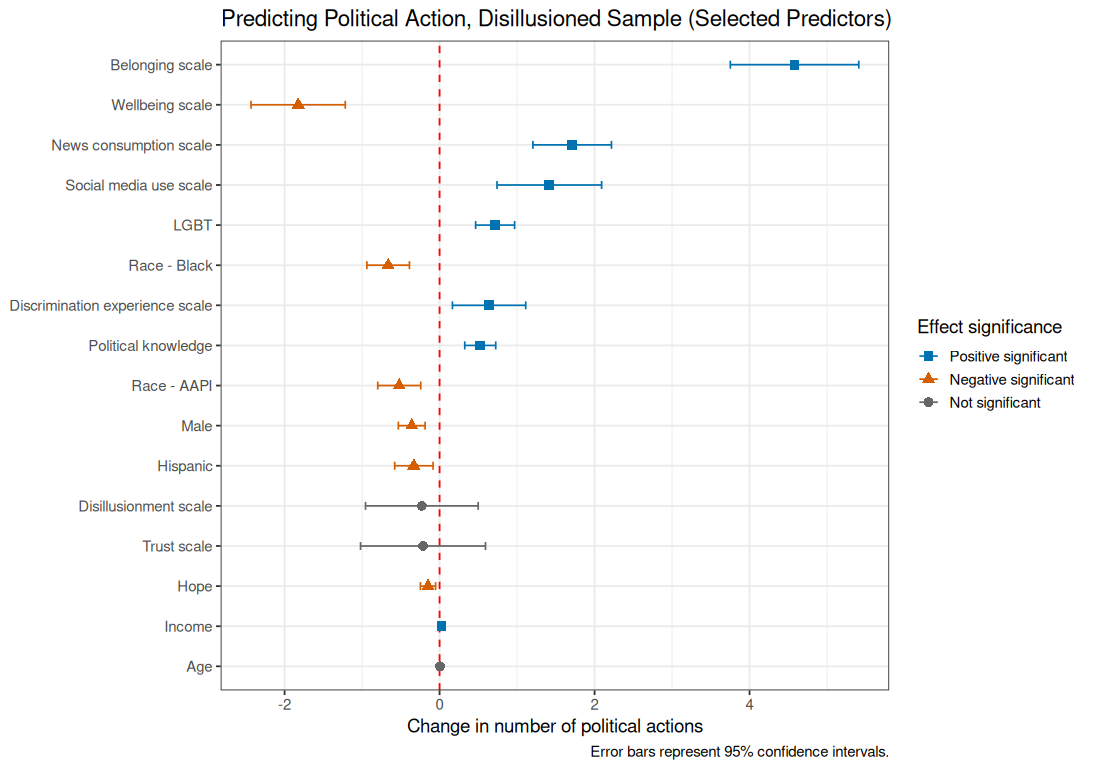
ABSTRACT: This mixed-methods project examines the scale, composition, and civic behavior of Americans characterized by high political disillusionment and low trust. Drawing on a nationally fielded NORC survey of 4,506 adults and four follow-up focus groups, the study estimates that this group constitutes 35 percent of the U.S. electorate, or roughly 85 million people. Although disaffected adults tend to be younger, have fewer economic resources, and are less likely to hold college degrees, they broadly resemble the overall electorate in racial and gender composition. They also participate in many civic and political activities at comparable rates, with voting representing their clearest participation deficit. The analyses identify frustration, perceived powerlessness, economic insecurity, and social isolation as central features of disaffection. Belonging emerges as the strongest correlate of engagement: stronger connections to friends, communities, and organizations are associated with greater voting intentions and broader civic participation. The findings suggest that trusted relationships, inclusive civic spaces, and opportunities producing tangible community benefits offer promising pathways for engaging disaffected citizens.